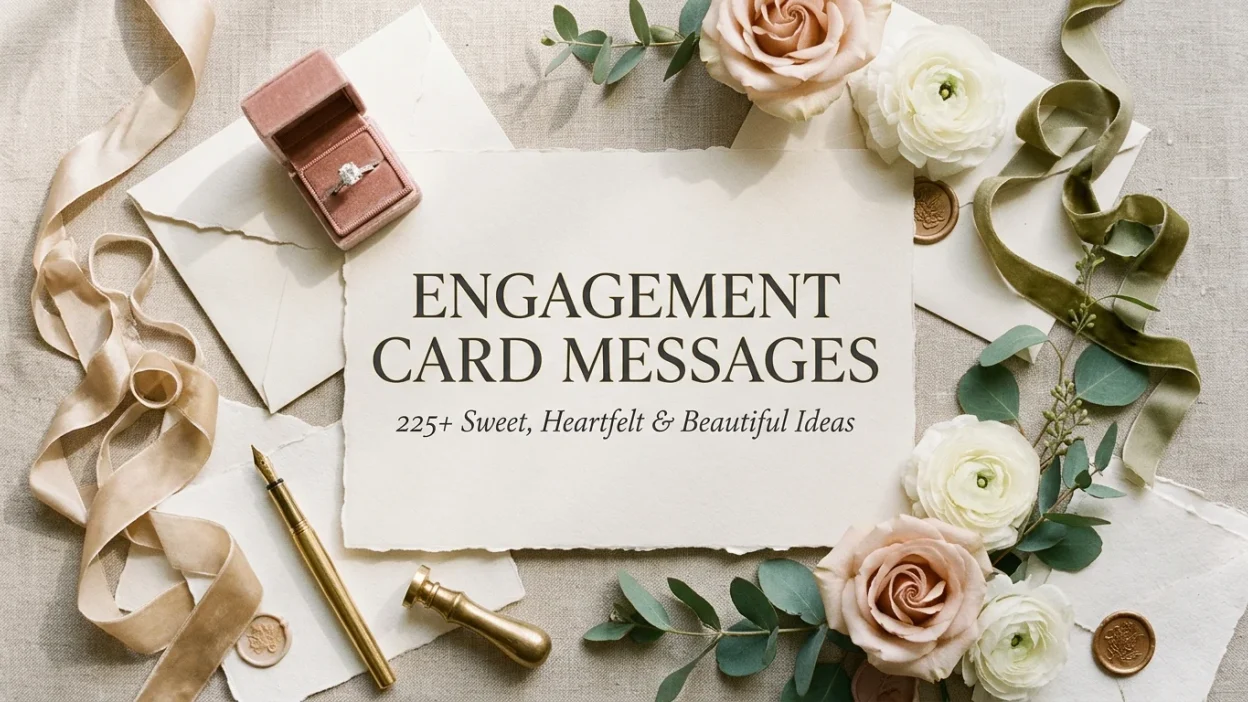
Finding the right words for an engagement card message can feel surprisingly tricky. The news is happy, the couple is excited and you want your note to match the moment. Yet most cards end up saying the same handful of phrases. The good news is that you don’t need to be a poet or a professional speechwriter. A genuine engagement card message usually needs just three things: a clear congratulation, something specific about the couple, and a warm wish for what comes next .
This guide walks through what actually works, what to skip, and how to write a message that feels personal whether you’re the best friend, a distant cousin, or a colleague who only knows one half of the pair.
What Makes an Engagement Card Message Land
The difference between a forgettable card and one the couple keeps comes down to specificity. “Congratulations, so happy for you” is a placeholder. “I remember when you first mentioned them and I knew then” is a memory . The second one belongs to you and the couple. The first belongs to everyone.
Engagement cards also arrive at a specific moment. The proposal just happened, but the wedding planning hasn’t consumed everything yet. That’s why etiquette experts often suggest keeping the focus on the engagement itself rather than jumping straight into venue questions or guest list talk . The couple is still enjoying the news. Let the card reflect that.
Interestingly, a short message can be just as effective as a long one. What matters is that it sounds like you, not like a greeting card company’s pre-printed sentiment. Warmth and honesty carry more weight than length .
A Simple Structure That Works for Almost Anyone
If you’re staring at a blank card and don’t know where to start, a basic three-part structure takes the pressure off. Open with the couple’s names or a greeting. Add a line of congratulations that feels specific to your relationship with them. Close with a wish for the future and your name .
That framework works for almost any situation. For a close friend, you might lean heavier on the personal memory. For a colleague, a shorter, warmer version fits better. The structure doesn’t change. Only the depth does.
One useful rule: aim for two or three sentences. Anything longer risks sounding like a speech. Anything shorter can feel rushed. A single well-chosen line, though, can absolutely work if it carries real feeling.
Messages for Close Friends and Family
When you know the couple well, you have access to something no one else does: the actual story. Use it. A close friend’s card can reference the early days of the relationship, a shared joke, or the moment you realized this was serious.
For a best friend, something like “I’ve watched you build something real with them, and this news makes complete sense” lands because it’s true to your history . For a sibling, the tone can be warmer and a bit more playful. “Watching you find someone who loves you this much is everything a sibling could want” balances sincerity with family closeness .
Parents often write longer notes, and that’s appropriate. A line like “We’ve loved seeing your love for each other bloom into this engagement” carries the weight of years of watching their child grow . Grandparents can lean into their own experience, offering a wish that references their own long marriage without making it about them.
The common thread here is that closeness earns you the right to be specific. Use that.
Heartfelt and Funny: Finding the Right Tone
Not every card needs to be tender. For some friendships, a joke is the most honest register available. A card that tries to be sentimental when your entire relationship runs on playful teasing will read as fake . The trick with humor is to make sure the affection sits underneath it.
“Congratulations on finding someone who’ll tolerate you forever, legally” works between friends who know exactly what you mean . “About time you made it official” can land well with a close friend, but it’s risky with a colleague or distant relative. The “finally” joke can read as a comment on their timeline, which isn’t anyone’s business .
For heartfelt messages, avoid the temptation to over-poeticize. “You bring out the best in each other, and it shows” is simple but genuine . A line like “Here’s to a lifetime of small kindnesses, shared jokes and Sunday mornings together” paints a picture without trying too hard .
The safest approach: match the tone to the relationship you actually have, not the relationship you wish you had.
When You Barely Know One Half of the Couple
This happens more often than people admit. You’ve worked with someone for years, or you’re a distant cousin, and you’ve met their partner once or twice. Writing a card can feel awkward.
The solution is honesty without apology. A line like “I don’t know you well yet, but I know your partner, and I could not be happier for you both” acknowledges the reality without sounding cold . It also gives you permission to compliment the partner through the person you do know: “I know they don’t do anything by halves, so I already think the world of you” .
What you should avoid is faking closeness. Don’t write “We’ve been through so much together” if you haven’t. The couple will spot the invention immediately, and the card will feel hollow . Warmth borrowed from a closer relationship never lands.
For workplace cards, keep it professional but genuine. “Wonderful news—congratulations to you both” is perfectly sufficient when you’re signing a group card from the office . If you know a specific detail, like the proposal story, you can include it. If not, a simple warm line is never wrong.
Short Messages That Still Feel Thoughtful
Not every card needs a paragraph. Sometimes the cleanest, most elegant message is a single sentence that lands with warmth. Short messages work especially well for acquaintances, group cards, or when the card itself has a nice design that doesn’t need a lot of text.
Consider “So happy for both of you and excited for everything ahead.” It’s brief, but it’s not cold . Or “Congratulations on finding someone who truly feels like home” . These lines work because they’re intentional. They don’t feel like you ran out of things to say.
For a group card from a team or friend group, one specific line beats a paragraph of generic congratulations crammed between signatures. “First round’s on me at the engagement party” is plenty if that’s the kind of relationship you have . The person organizing the card should set the tone with the first message, so avoid the autopilot “Congrats!!!” and put down something real.
What to Avoid Writing in an Engagement Card
Certain phrases show up in engagement cards constantly, and several of them are risky.
The “finally” joke is the most common offender. It works between very close friends who know it will land. In a card from a colleague or distant relative, it can sound judgmental about the couple’s timeline . Skip it unless you’re certain.
Comments about the ring’s size or cost are never appropriate . Neither are questions about the wedding date, venue, or budget. The couple just got engaged. Let them enjoy that before the planning pressure begins .
Avoid anything that suggests you expect an invitation. “Can’t wait for the wedding!” can sound presumptuous if you’re not close to the couple. The engagement is the moment worth celebrating in the card. The wedding will take care of itself .
Also steer clear of sarcastic marriage jokes. “Say goodbye to freedom” or “ball and chain” humor lands poorly with many people, and it can sour the tone of an otherwise warm message . If you want to be funny, aim the joke at the situation or at yourself, not at the institution of marriage or the couple’s choices.
Timing and Etiquette Basics
Engagement cards aren’t mandatory, but they’re almost always appreciated. Etiquette experts generally suggest sending them within a few weeks of hearing the news . The couple will likely receive plenty of messages, and a prompt card stands out.
A blank card with a handwritten note often feels more genuine than one with a pre-printed message. If you can, choose a card with a bit of quality to it—heavier cardstock, a nice design—and write your message by hand . The effort shows.
When signing off, match the closer to your relationship. “Love” suits family and close friends. “Warm wishes” or “Best” works for colleagues and acquaintances. If the couple might not recognize your handwriting, add a small identifier like a last name or a context clue .
Second Engagements and Later-in-Life Couples
Not every engagement is a first engagement, and the card that assumes wide-eyed youthful excitement can land wrong for a couple in their fifties, or for someone marrying again after a divorce or a loss. The tone here should be steadier and often warmer.
Write to the choice rather than the fairy tale. “You both know exactly what you’re signing up for, and you’re doing it grinning, which is the most romantic thing I can think of” honors the experience behind the decision . Skip anything that frames it as a do-over or a consolation prize. It isn’t. It’s a person choosing, with full information, that this one is worth it.
The same principle applies to couples who have been together for years before getting engaged. The card doesn’t need to pretend this is a surprise. Acknowledging the history can make the message feel more real, not less.
Making a Group Card Feel Genuine
Office cards and group cards from friend circles have their own challenges. Most signers won’t write the deep, personal message, and they shouldn’t try. One specific, warm line per person is plenty. “So happy for you both—congratulations” is fine when it’s one of fifteen signatures .
If you’re organizing the card, the first message you write sets the tone. Resist the urge to put down “Congrats!!!” with three exclamation marks. Write something with a little substance, and others will follow suit. If you know a real detail—a proposal story, a shared interest—use it to anchor the card.
For workplace cards, keep questions about wedding planning out of the card itself. Those are conversations, not card messages . And don’t assume gender roles or use terms the couple hasn’t used. Stick to their names or “the two of you.”
Frequently Asked Questions
How long should an engagement card message be?
Two or three sentences usually works best. A single warm line can also be enough if it carries genuine feeling. Longer messages are appropriate for parents or very close friends, but they should still feel focused rather than rambling .
Is it okay to write a funny engagement card?
Yes, if you know the couple well enough to be sure the humor will land. Keep the joke affectionate rather than sarcastic, and avoid marriage jokes that imply commitment is a burden. If you’re unsure, a warm and sincere message is always the safer choice .
What should I write if I only know one person in the couple?
Acknowledge the distance honestly. “I don’t know you well yet, but I’m so happy for you both” is perfectly warm and appropriate. You can also compliment the partner through the person you know: “I know they have great taste, so I already think the world of you” .
Should I mention the wedding in an engagement card?
It’s better to focus on the engagement itself. Questions about dates, venues, or guest lists can create pressure the couple doesn’t need yet. A light wish like “Wishing you a wonderful engagement season” is fine, but let the wedding planning come later .
What’s the best way to sign an engagement card?
Match the closer to your relationship. “Love” for family and close friends, “Warm wishes” or “Best” for colleagues and acquaintances, and “Cheers” for casual friends. Always include your name, and add a small identifier if the couple might not recognize your handwriting .
Can I send an engagement card if I wasn’t invited to the wedding?
Yes. An engagement card is separate from a wedding invitation. It’s a way to congratulate the couple on the news, not a claim on a future invitation. Send it with warmth and no expectations .
What if I have private reservations about the engagement?
Keep them out of the card. Engagement cards are not the place for doubts, warnings, or subtle digs. If you can’t write something genuinely warm, a short and simple congratulation is better than a message that carries hidden judgment .
Conclusion
A good engagement card message doesn’t need to be clever or long. It needs to sound like you, fit the relationship you actually have with the couple, and focus on the happy news in front of them. Whether you’re writing two sentences or a short paragraph, the same principles apply: be specific when you can, be honest when you can’t, and skip the jokes that might land wrong. The couple will remember that you took the time to write, far longer than they’ll remember the exact phrasing. Keep it warm, keep it real, and you’ll get it right.

Olivia Bennett is a content writer who specializes in word meanings, internet slang and everyday expressions. She enjoys creating clear, informative content that helps readers understand language and discover the meanings behind words.