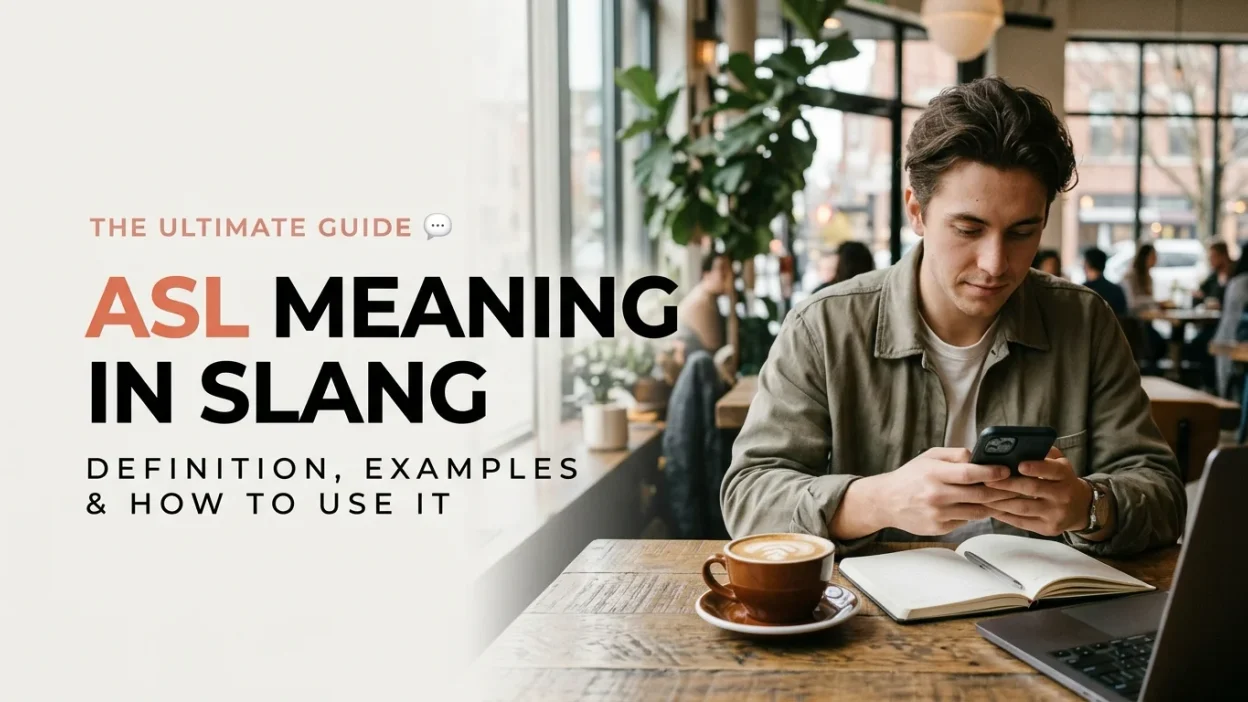
The slang term ASL has two completely different meanings depending on the context and the generation of the person using it. In modern slang, especially on TikTok and among Gen Z, ASL is an abbreviation for “as hell.” It is used to add emphasis to a statement, similar to saying “extremely” or “very.” However, in older internet chat rooms, ASL stood for “Age, Sex, Location,” a question used to ask for someone’s personal details. Understanding which meaning applies depends entirely on the situation and the platform.
What Does ASL Mean in Slang?
When you see someone type “asl” in lowercase or in the middle of a casual sentence on social media, it is almost certainly a shortening of “as hell.” This usage is particularly common on TikTok, Twitter, and Instagram, where users want to emphasize a feeling or reaction without typing out the full phrase.
For example, if someone posts a video of a very spicy food challenge, a commenter might write, “That looks painful asl.” In this context, the abbreviation functions as an intensifier. It tells the reader that the food is not just painful, but extremely painful. This use of ASL is casual, informal, and primarily associated with Generation Z internet culture.
ASL Meaning in Text and Chat
In a text message or direct message with friends, asl usually means “as hell.” You might receive a text that says, “I’m hungry asl” or “That class was boring asl.” The tone is conversational and relaxed. Using the abbreviation instead of the full phrase can make the message feel more immediate or playful.
However, if a message comes from an unknown number or from a stranger in an online chat room, the meaning could be different. In those situations, ASL might be a request for personal information.
What Does ASL Mean on TikTok and Social Media?
On TikTok, the “as hell” meaning dominates. The platform’s younger user base has popularized this usage, often creating videos that explicitly explain the shift in meaning. For instance, a creator might make a video saying, “When someone says ASL and you think they mean age, sex, location, but they actually mean as hell.” This kind of content highlights the generational divide in how the abbreviation is understood.
On other platforms like Twitter and Instagram, the context usually makes the meaning clear. If the abbreviation appears in a caption or a reply to a casual post, it means “as hell.” If it appears as a standalone question in a direct message from someone you do not know, it is more likely the older definition.
The Original Meaning: Age, Sex, Location
Before Gen Z adopted the abbreviation, ASL was a standard question in early internet chat rooms, such as AOL Instant Messenger and IRC. It stood for Age, Sex, Location and was used to quickly gather basic information about the person you were chatting with. A typical exchange might look like this: “ASL?” followed by a response like “18/F/California.”
This usage is now largely considered dated or associated with older internet users. While it is not offensive in itself, asking a stranger for their age, sex, and location can come across as intrusive or suspicious in modern online spaces. Therefore, the “as hell” meaning emerged as a way to reuse the familiar letters for a harmless, expressive purpose.
Why the Confusion Exists
The dual meaning of ASL has created genuine confusion and even humor online. People who grew up using the internet in the 1990s and 2000s might be startled to see a teenager type “I’m tired asl” because they initially interpret it as a request for personal data. Conversely, a younger user might be confused if an older person asks them “ASL?” in a chat, wondering why someone is asking if they are “as hell.”
This misunderstanding is a natural result of language evolving across different internet eras. It is a clear example of how the same set of letters can take on an entirely new life when a new community adopts them.
How to Tell Which Meaning Is Being Used
To interpret ASL correctly, look at the words around it and the situation in which it appears. Here are a few practical clues.
If the abbreviation appears within a sentence or at the end of a statement, it almost certainly means “as hell.” For example: “This traffic is bad asl” or “I love this song asl.” In these cases, removing the abbreviation and replacing it with “as hell” preserves the sentence’s meaning and tone.
If the abbreviation appears on its own, often with a question mark, and comes from someone you do not know in a chat context, it is likely a request for age, sex, and location. For example: “ASL?” as a standalone message is a strong indicator of the older meaning.
If the message comes from a friend or peer on a social media platform like TikTok or Instagram, “as hell” is the safe bet. If it comes from a stranger in a random chat room or an anonymous messaging app, the older meaning is more probable.
Examples of ASL Meaning “As Hell” in Conversation
The following short exchanges show how the slang is used naturally.
Example 1: Person A: “Did you see that new horror movie?” Person B: “Yeah, it was scary asl. I couldn’t sleep last night.”
Example 2: A text message from a friend: “Work was long asl today. I’m going straight to bed.”
Example 3: A comment on a funny video: “I’m crying asl, this is too accurate.”
In each case, the abbreviation adds intensity. It does not change the meaning of the sentence; it amplifies it. This is the core function of the slang term.
Other Meanings of ASL
While “as hell” and “age, sex, location” are the two most relevant meanings for text and social media, the abbreviation ASL also stands for American Sign Language. This is a formal, established meaning used in academic, medical, and educational contexts. When you see ASL in an article about accessibility or language, it refers to the sign language used by Deaf communities in the United States and parts of Canada.
Because American Sign Language is a formal term, it is usually capitalized and appears in contexts that have nothing to do with casual chat. You are unlikely to confuse it with the slang meaning if you pay attention to the surrounding text.
Similar Slang Terms and Abbreviations
ASL is part of a broader family of internet abbreviations that shorten common phrases for speed and casual tone. Some related terms include:
AF (as f***): This serves the same intensifying purpose as “as hell” but is considered more vulgar. People often use AF when they want stronger emphasis, while ASL is slightly milder.
TBH (to be honest): This abbreviation is often used to introduce an opinion or admission, and it can appear alongside ASL. For example: “TBH, I’m nervous asl about this test.”
NGL (not gonna lie): Similar to TBH, this phrase is used to preface a statement. It pairs naturally with ASL in casual conversation.
These abbreviations share a common trait: they save time and signal a relaxed, informal tone. Using them correctly helps you match the register of the conversation.
Common Misunderstandings About ASL
One common mistake is assuming that ASL always means the same thing. Because the abbreviation has two widely known meanings from different eras, context is essential. A message that seems confusing or inappropriate might simply be using the other definition.
Another misunderstanding is treating “as hell” as a formal expression. It is not. You should avoid using ASL in professional emails, academic writing, or any situation that requires formal language. It belongs in casual chat, social media comments, and text messages with friends.
Finally, some people may worry that using ASL to mean “as hell” is disrespectful to American Sign Language. In practice, the two uses exist in completely separate contexts, and the slang abbreviation is not intended to reference the sign language. However, in a formal or academic setting, it is always better to spell out “American Sign Language” to avoid any ambiguity.
Frequently Asked Questions
What does ASL mean in text slang?
In text slang, ASL most commonly means “as hell.” It is used to emphasize a statement, similar to “very” or “extremely.” For example, “I’m tired asl” means “I’m very tired.”
Does ASL still mean age, sex, location?
Yes, but that usage is now considered old-fashioned and is mostly associated with early internet chat rooms. In modern casual conversation, especially among younger users, “as hell” is the dominant meaning.
Is ASL appropriate to use in professional settings?
No. ASL as slang is informal and should be avoided in professional emails, work messages, or formal writing. In a professional context, ASL would only be appropriate if you are discussing American Sign Language.
How can I tell if someone means “as hell” or “age, sex, location”?
Look at the context. If the abbreviation appears inside a sentence or at the end of a statement, it means “as hell.” If it appears as a standalone question from a stranger in a chat room, it likely means “age, sex, location.”
Is ASL the same as AF?
They serve a similar purpose as intensifiers, but AF is more vulgar. ASL (“as hell”) is generally considered milder and more acceptable in casual conversation than AF.
Conclusion
The slang meaning of ASL depends on who is using it and where. For most people on TikTok, Instagram, and in text messages today, ASL stands for “as hell” and functions as a casual way to add emphasis. The older meaning, “age, sex, location,” still exists but is largely confined to specific internet contexts and can cause confusion if misinterpreted. By paying attention to the surrounding words and the situation, you can quickly determine which meaning is intended and respond appropriately. When in doubt, remember that “as hell” is the safer interpretation in modern social media spaces, while “age, sex, location” belongs to an earlier era of online communication.

Olivia Bennett is a content writer who specializes in word meanings, internet slang and everyday expressions. She enjoys creating clear, informative content that helps readers understand language and discover the meanings behind words.