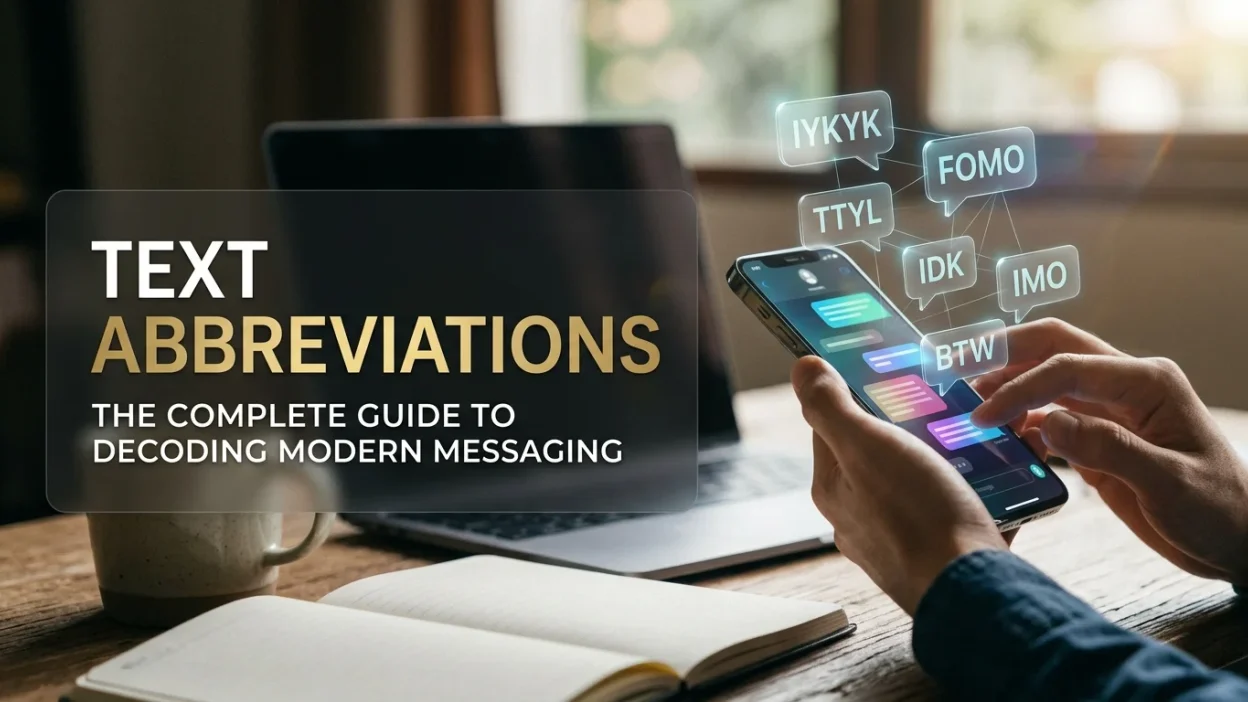
📱 Text abbreviations are the shorthand language of the digital world. They save time, fit into character limits, and create a sense of shared understanding between people who know the code. But they also create confusion, especially when you receive a string of letters that looks like a random scramble. The good news is that most text abbreviations follow predictable patterns, and once you learn the core vocabulary, the rest becomes much easier to decode.
This guide covers the most common text abbreviations, explains why they exist, and helps you navigate the unwritten rules of when to use them and when to spell things out.
📌 Why Text Abbreviations Exist
The history of texting abbreviations is rooted in practical limitations. In the early days of SMS, messages were capped at 160 characters, and typing on a numeric keypad required multiple button presses per letter . Every character counted, and speed mattered. People adapted by shortening common words and phrases into acronyms and phonetic spellings.
Those limitations are gone on modern smartphones, but the habit stuck. Abbreviations became part of internet culture, a way to signal familiarity and casual tone. Today, they persist because they are convenient, expressive, and often more fun than typing everything out.
💬 The Most Common Everyday Abbreviations
These are the workhorses of texting. You’ll see them constantly, and most people understand them without thinking.
Time and Scheduling
- BRB: Be right back
- OMW: On my way
- ETA: Estimated time of arrival
- EOD: End of day
- TBD: To be determined
- ASAP: As soon as possible
Conversation and Reactions
- LOL: Laughing out loud
- LMAO: Laughing my ass off
- OMG: Oh my god
- IDK: I don’t know
- TBH: To be honest
- NGL: Not gonna lie
- SMH: Shaking my head
- IMO: In my opinion
Logistics and Plans
🔥 Gen Z and Newer Slang Abbreviations
Language evolves, and texting slang changes quickly. These abbreviations are more recent and may not be understood by older generations.
Popular Searches in 2026
According to search data, the most-searched texting acronyms reveal what people are struggling to understand. SYBAU (shut your b***h ass up) topped the list with over 300,000 searches, followed by FAFO (f*** around and find out) and SMH . Other frequently searched terms include:
- PMO: Pisses me off
- ATP: At this point
- ICL: I can’t lie
- WTW: What’s the word?
- WYLL: What you look like?
Slang That Confuses Parents
Parents often encounter abbreviations their kids use that aren’t in standard dictionaries. Bet means yes or okay. Cap means lie, while no cap means not lying. Sus means suspicious or questionable. GOAT means greatest of all time . These terms blend acronyms with broader slang culture, making them harder to decode without context.
💼 Text Abbreviations in Professional Settings
Not all abbreviations belong in the workplace. Using the wrong one can make you seem unprofessional or, worse, incomprehensible.
Safe for Work
Some abbreviations are widely accepted in professional communication because they convey logistics without emotion:
Risky at Work
These are fine with close colleagues but should be avoided in client-facing communication:
Never Use at Work
These carry strong language or dismissive tone and should stay out of professional contexts entirely:
The rule of thumb is simple: if the abbreviation contains a swear word or signals impatience, don’t use it in a work message .
⚠️ Abbreviations Parents Should Watch For
Some texting abbreviations are harmless fun. Others signal something more concerning. While most acronyms are innocent, certain codes are used to hide conversations from adults or reference risky behavior.
Concealment Codes
These aren’t inherently bad, but they indicate the sender wants privacy. If you see them frequently, it may be worth a conversation about online safety.
Harm-Related Codes
These are serious and should never be ignored:
If you encounter these in your child’s messages, take them seriously and seek appropriate support.
❌ Common Mistakes to Avoid
Mistake 1: Assuming Everyone Knows the Same Abbreviations
Abbreviations vary by generation, region, and platform. A term that’s obvious to a Gen Z TikTok user might be completely unknown to a Gen X colleague. When in doubt, spell it out.
Mistake 2: Using Abbreviations in Serious Conversations
If someone shares bad news or something vulnerable, responding with “LOL” or “SMH” is inappropriate. Save abbreviations for casual, low-stakes exchanges.
Mistake 3: Confusing Similar-Looking Abbreviations
IDK means “I don’t know.” IDC means “I don’t care.” IDT means “I don’t think.” They look similar but carry very different tones. Misusing one for another can send the wrong message.
Mistake 4: Overusing Abbreviations
A message that reads “OMG IDK WYD but HMU ASAP TBH” is exhausting to parse. Abbreviations save time for the writer but cost time for the reader. Use them sparingly.
❓ Frequently Asked Questions
What is the most common text abbreviation?
LOL (laughing out loud) is one of the oldest and most widely recognized text abbreviations. Other extremely common ones include OMG, IDK, and BRB .
What does IDK mean?
IDK stands for “I don’t know.” It’s one of the most basic and widely used text abbreviations .
What does TBH mean?
TBH means “to be honest.” It’s used to introduce an honest opinion or admission, often in a casual context .
Is it okay to use text abbreviations at work?
Some are fine, like FYI or EOD. Others, especially those with swear words or dismissive tone, should be avoided. When in doubt, spell it out .
What does SMH mean?
SMH stands for “shaking my head.” It expresses disappointment, disbelief, or frustration .
What are some newer abbreviations I should know?
NGL (not gonna lie), ATP (at this point), and ICL (I can’t lie) are common in 2026. SYBAU and FAFO are also frequently searched, though they contain strong language .
What does “cap” mean in texting?
Cap means lie. No cap means “not lying” or “for real.” It’s part of broader Gen Z slang rather than a traditional acronym .
✅ Conclusion
Text abbreviations are a language of their own, shaped by history, technology, and culture. They save time, create connection, and add personality to digital conversations. But they also require context and judgment. Learn the common ones, respect the boundaries of professional communication, and pay attention to the tone of the conversation before you reply with three letters. When used well, abbreviations make texting faster and more fun. When used poorly, they cause confusion and frustration. The key is knowing the difference.

Olivia Bennett is a content writer who specializes in word meanings, internet slang and everyday expressions. She enjoys creating clear, informative content that helps readers understand language and discover the meanings behind words.