Your phone buzzes. It’s a text about a package you didn’t order, a toll you didn’t rack up, or a job offer that sounds too good to be true. You’re not alone. consumers reported losing $470 million to scams that started with a text message and the volume of these messages keeps climbing . Spam texts have become one of the most common forms of digital harassment and the tactics behind them have gotten sharper. AI now helps scammers write polished, convincing messages that lack the clumsy grammar errors people used to rely on as a warning sign .
This guide cuts through the noise. It explains what makes spam texts different from legitimate business messages, why replying “STOP” can backfire and the concrete steps that actually reduce the flow.
What Counts as a Spam Text?
Not every unwanted message is spam. There’s a useful distinction between illegal spam and messages you simply forgot you signed up for.
Legitimate businesses send automated texts through registered short codes—five- or six-digit numbers that carriers tightly control. These messages usually follow an opt-in, and replying “STOP” genuinely removes you from the list . Spam texts, by contrast, often arrive from regular ten-digit numbers or spoofed sender IDs. They’re designed to trick you into clicking a link, calling a number, or replying with personal information. The FTC’s data shows the most-reported category is fake package delivery notices, followed by bogus fraud alerts, unpaid toll scams, and “wrong number” messages that start friendly and turn into a con .
Why Replying “STOP” Can Make Things Worse
This is the counterintuitive part that trips up a lot of people. When you reply to a spam text—even with “STOP”—you confirm that your number is active and monitored by a real person . Scammers sell lists of “verified” numbers to other scammers. A single reply can put you on dozens of new lists.
The exception is a message you’re confident came from a legitimate company you have a relationship with. In that case, “STOP” works. But if the message is unsolicited, comes from a random number, or pressures you to act fast, the safest move is silence. Don’t reply, don’t click, don’t call. Just delete.
The Scam Formats You’re Most Likely to See
Spam texts follow patterns because the same scripts work over and over. Knowing the common formats makes them easier to spot in the moment.
The Fake Delivery Notice
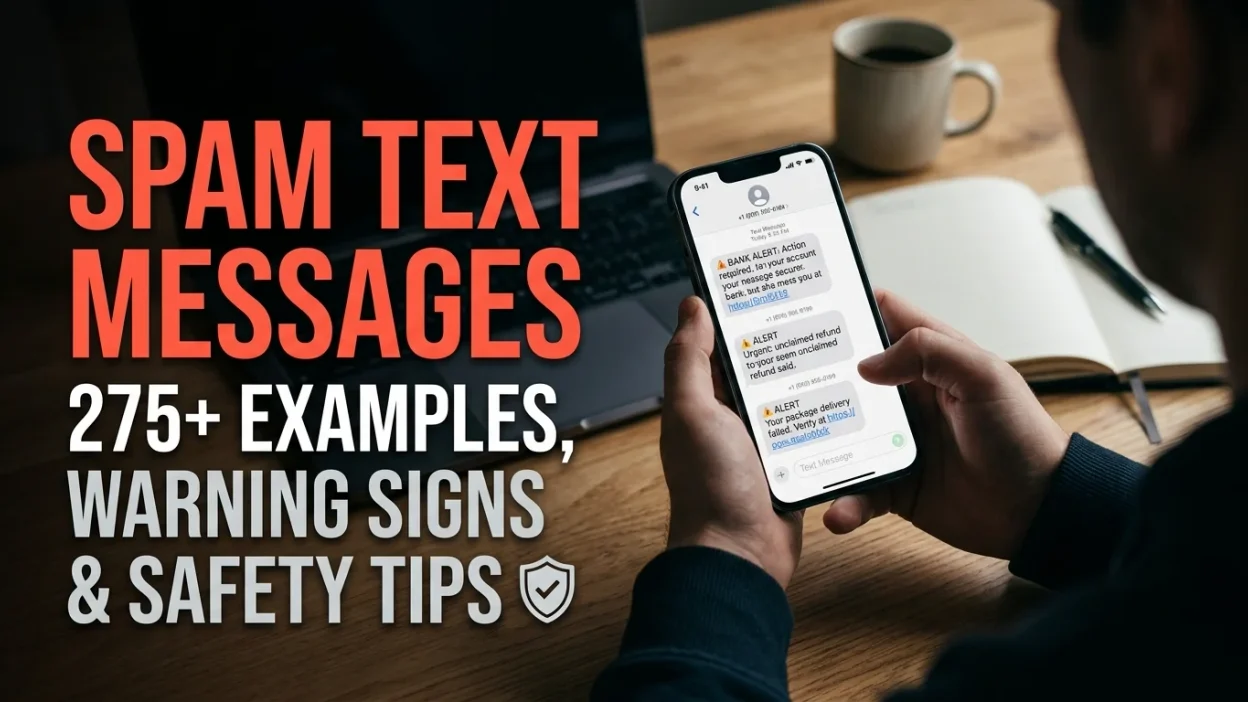
A text claims your package is held up and asks you to click a link to reschedule or pay a small fee. The link leads to a page designed to harvest your personal or financial information . This is the single most-reported text scam category, and it spikes during holiday seasons.
The “Wrong Number” Conversation
A stranger texts asking if you’re someone else. When you reply to correct them, they apologize and strike up a friendly conversation. Weeks later, they mention an investment opportunity or ask for a favor. This is a long-game romance or investment scam, and it’s increasingly powered by AI that can hold realistic conversations at scale .
The Urgent Account Alert
A message warns that your bank account is locked, your toll is unpaid, or a government agency needs immediate action. It includes a link to “verify” your details. The link goes to a fake login page that steals your credentials .
How to Tell a Legitimate Business Text from a Scam
The single most reliable signal is the sender number. Legitimate businesses use registered short codes, which are much harder for scammers to spoof than regular ten-digit numbers . If a message claims to be from a bank or delivery company but arrives from a normal phone number, treat it as suspect.
Beyond the number, look at the content. Real business messages usually reference specific details—an order number, the last four digits of an account, your name. Scam texts stay vague because they’re sent to thousands of people at once. They also lean on urgency. Phrases like “act now,” “final warning,” or “your account will be suspended” are designed to bypass your critical thinking .
If you’re unsure, don’t engage with the message at all. Instead, open your browser and type the company’s official website address directly. Log into your account or call the customer service number you find there. That way you’re verifying through a channel you control, not one the scammer provided.
The Settings That Actually Reduce Spam
Your phone has built-in defenses that many people never turn on. Enabling them takes a minute and cuts down on the noise significantly.
On iPhone
Go to Settings > Apps > Messages and enable Filter Unknown Senders. This sorts messages from numbers not in your contacts into a separate folder, so they don’t interrupt you with notifications . You can review that folder periodically and delete anything suspicious without engaging.
On Android
Google Messages automatically sorts messages from unknown senders into Spam & blocked folders. To make sure spam protection is active, open Messages, tap your profile, go to Messages settings, and check that Spam protection is toggled on . This uses Google’s detection systems to flag suspicious messages before they reach your main inbox.
Reporting Spam Texts: What Actually Happens
Forwarding a spam text to 7726 (SPAM) is the standard reporting method in the US. Most major carriers participate, and the reports help them identify and block campaigns at the network level . The process is simple. On iPhone, press and hold the message bubble, tap More, select the message, and forward it to 7726. On Android, long-press the message, tap Forward, and send it to the same number .
You can also file a complaint with the FTC at ReportFraud.ftc.gov. While individual reports may not lead to immediate action on your specific case, aggregated data helps regulators and law enforcement track patterns and shut down larger operations . Reporting won’t stop the texts you’re already getting, but it contributes to the broader defense.
When Spam Texts Cross into Dangerous Territory
Most spam is annoying. Some of it is actively dangerous. Two scenarios deserve special attention.
If You Clicked a Link
If you tapped a link in a suspicious text, don’t panic, but act quickly. If the link led to a page that asked for login credentials, change your password for that account immediately and enable two-factor authentication. If you entered financial information, contact your bank and monitor your accounts for unauthorized activity.
If You Replied with Personal Information
If you responded to a scam text with information like your address, Social Security number, or account details, treat it as a potential identity theft situation. Freeze your credit with the major bureaus, monitor your credit reports, and consider filing a report with the FTC and your local police department .
What Not to Do When Spam Texts Arrive
A few common reactions make the problem worse. Replying is the biggest one, as covered above. But there are others.
Don’t click “unsubscribe” links in unsolicited texts. Legitimate marketing messages use “STOP,” not a link. A link in a spam text is almost always designed to confirm your number or deliver malware . Don’t call any phone number included in the message, either. Scammers staff call centers designed to extract information or payment. And don’t assume that because a message looks professional, it’s legitimate. AI has made polished, convincing scam messages the norm rather than the exception .
Why Spam Texts Keep Coming
The economics explain the persistence. Sending a text costs a fraction of a cent. Even a tiny response rate makes the campaign profitable. Scammers also face little risk. They operate across borders, switch numbers constantly, and often use infrastructure that’s difficult for US carriers to shut down.
The FTC’s data shows text scams are not a temporary nuisance. They’re a stable, growing criminal industry . Understanding that reality helps set expectations. You can reduce the volume with filters and reporting, but eliminating spam entirely isn’t realistic. The goal is to recognize it quickly and avoid the traps.
Frequently Asked Questions
Is it illegal to send spam texts?
Yes, in many cases. The Telephone Consumer Protection Act (TCPA) restricts automated text messages sent without consent. But enforcement is difficult because many scammers operate overseas or use spoofed numbers that are hard to trace. Legitimate marketers face penalties; criminal scammers often don’t.
Why do I get spam texts from my own area code?
Scammers spoof local numbers because people are more likely to open a message that appears to come from someone nearby. The number on your screen is meaningless. It doesn’t indicate where the message actually originated .
Can I block a short code?
Yes, you can block a short code the same way you block a regular number. But be careful. If you block a legitimate short code that a service you use relies on—like a bank or delivery service—you’ll stop receiving important messages from them too. Only block short codes you’re confident are spam.
What happens if I click a link in a spam text?
It depends on the link. Some lead to phishing pages that steal login credentials. Others prompt you to download malware. Some simply confirm that your number is active. The safest approach is never to click. If you already have, monitor your accounts and change any passwords you may have entered .
Does blocking a number stop spam?
Sometimes, but not always. If the same number keeps texting you, blocking works. But scammers frequently switch numbers or spoof new ones, so blocking one number may not stop the overall flow . Filters and reporting are more effective long-term strategies.
Are all short code messages legitimate?
No. While short codes are harder to spoof than regular numbers, short-code spoofing does exist. Scammers may register similar-looking codes in foreign markets or use sender-ID spoofing. The key is context. If you didn’t request a code and the message pressures you to click or reply, treat it as suspicious regardless of the number .
Conclusion
Spam texts are a permanent feature of modern communication, but they don’t have to dominate your phone. The most effective defense is a combination of habits and settings. Turn on your phone’s spam filters. Never reply to or click links in unsolicited messages. Report the worst offenders to 7726 and the FTC. And when a message creates a sense of urgency, treat that urgency as a warning sign rather than a reason to act fast.
The scammers rely on volume and speed. You have something they don’t: the ability to slow down, verify, and delete. A few seconds of skepticism is often all it takes to avoid a costly mistake. 🛡️

Olivia Bennett is a content writer who specializes in word meanings, internet slang and everyday expressions. She enjoys creating clear, informative content that helps readers understand language and discover the meanings behind words.