A fake message can ruin a friendship, empty a bank account, or derail a court case. It can also be a harmless prank between friends or a tool for a movie prop. The difference between these outcomes isn’t the technology—it’s the intent behind it. Fake messages sit at an uncomfortable intersection of creativity, deception, and crime, and understanding that spectrum is more important now than ever. AI tools have made convincing fakes easier to produce, while scammers have turned text-based deception into a multi-billion-dollar industry.
This guide breaks down the two distinct worlds of fake messages: the scam texts that arrive on your phone uninvited, and the fabricated screenshots people create themselves. Both matter, but for very different reasons.
The Two Worlds of Fake Messaging
Most people searching for information about fake messages are actually dealing with one of two scenarios, and they require completely different responses.
The first is incoming deception. Someone sends you a text that looks like it’s from your bank, a delivery company, or even a family member. The message is designed to steal your information or money. This is smishing, and it’s the most common form of fake message the average person encounters .
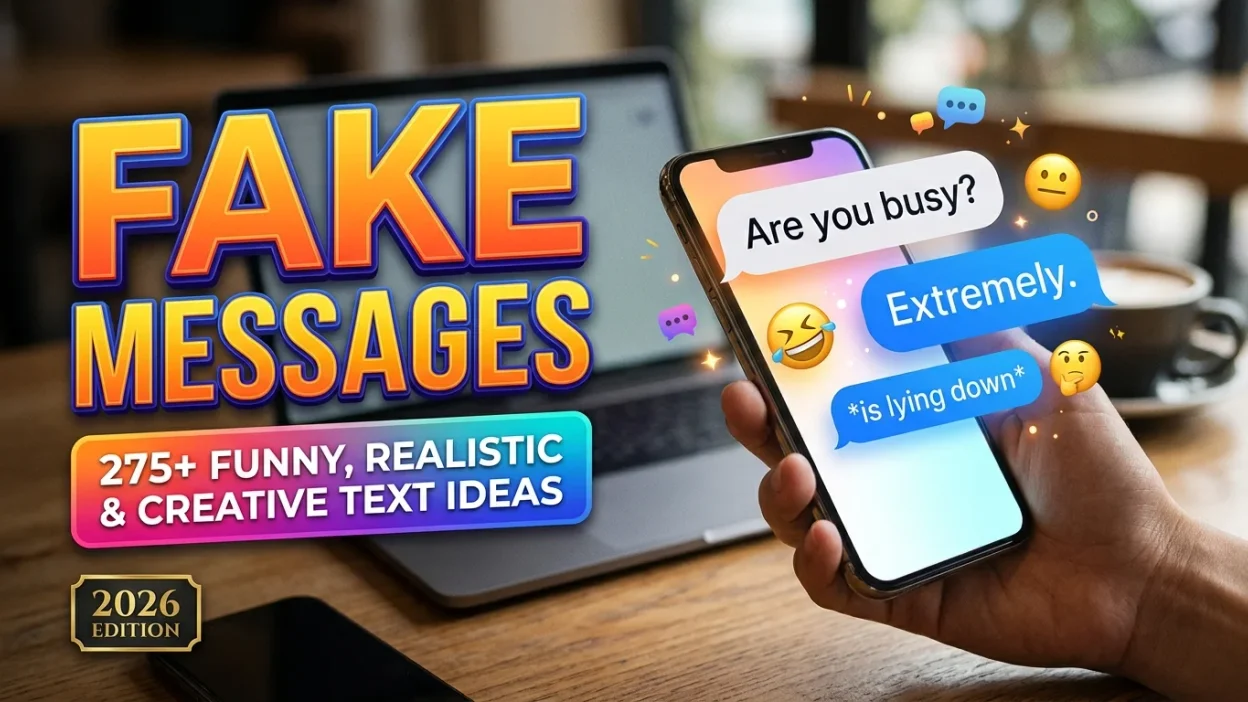
The second is outgoing fabrication. Someone—maybe a friend, maybe a stranger on the internet—creates a fake conversation screenshot to prank someone, win an argument, or manufacture evidence. Apps and websites exist specifically to make this easy .
Both types are “fake messages,” but the first is a crime in progress and the second is a gray area that depends entirely on what happens next.
Why Scammers Send Fake Texts
The economics of SMS fraud explain its persistence. Sending a text costs almost nothing. Even a tiny response rate makes a campaign profitable. Scammers don’t need you to be gullible—they need you to be distracted for three seconds.
The most common formats follow predictable scripts. Each one creates a small spike of anxiety or urgency, and that spike is the entire attack. The moment you click, you’re on a page designed to harvest credentials or install malware.
What’s changed in recent years is sophistication. Grammar errors used to be a reliable tell. AI now produces polished, professional-sounding messages that mimic legitimate business communication . The old advice to “look for typos” still helps, but it’s no longer sufficient.
How to Spot a Scam Text Before You Click
The single most reliable defense is a simple habit: never use the contact information in the message itself. If a text claims to be from your bank, don’t call the number it provides. Don’t click the link. Open your browser, type your bank’s official address, and log in the way you normally would. If there’s a real problem, you’ll see it there .
Beyond that habit, certain patterns should trigger immediate suspicion. Messages that demand urgent action—”your account will be suspended,” “final warning,” “act now”—are designed to bypass critical thinking. So are messages about things you didn’t do: a package you didn’t order, a toll you didn’t drive through, a job offer you never applied for .
Spoofing makes the sender number unreliable. Scammers can make a message appear in the same thread as legitimate texts from a real company . This is why the number on screen means very little. The content and your own independent verification are what matter.
The Legal Line: When Does a Fake Message Become a Crime?
Creating a fake text message isn’t inherently illegal. Using one to deceive, harm, or defraud someone is. The line is intent, and courts treat it seriously .
Fraud is the most straightforward category. If you fabricate a text to obtain money or personal information, that’s a crime. Defamation applies when a fake message damages someone’s reputation through false statements presented as fact. Harassment covers repeated fake messages designed to intimidate or cause distress. And perjury or obstruction applies when someone submits a fabricated text as evidence in a legal proceeding—a scenario that carries severe penalties .
The “prank” defense only works if everyone involved understands it’s a joke. A fake message sent to a friend who knows your sense of humor is very different from one designed to manipulate a stranger, a colleague, or a court .
Why Fake Message Generators Exist (And Who Uses Them)
Apps and web tools that simulate conversations on iMessage, WhatsApp, Instagram, and Discord have existed for years. They’re used for meme creation, storytelling, UI mockups, video props, and yes, pranks . The better ones produce screenshots that look nearly indistinguishable from the real thing.
These tools aren’t illegal. They’re also not harmless in every context. A fake screenshot posted publicly can spread misinformation, damage reputations, or create false evidence in personal disputes. The technology is neutral; the application isn’t.
What’s worth understanding is that fake screenshots are widely recognized as easy to produce. People on social media are increasingly primed to question the legitimacy of a DM screenshot . That skepticism is healthy, but it doesn’t eliminate the harm a well-crafted fake can cause in the moments before skepticism kicks in.
The Emotional Toll of Scam Messages
Beyond the financial risk, there’s a quieter cost. People who receive frequent scam texts report feeling anxious, violated, and constantly on guard.
The anxiety is not irrational. The FTC has reported billions in losses from text-based scams, and the problem isn’t going away . But the emotional response can be managed with a simple framework: treat every unexpected message as suspicious by default, verify independently, and don’t engage. A few seconds of skepticism is often all it takes to avoid a costly mistake.
What to Do If You’ve Already Clicked
If you tapped a link in a suspicious text, don’t panic, but act quickly. The first step is to identify what information you may have exposed.
Teaching Others to Recognize Fake Messages
The best defense against fake messages is a household or workplace that talks about them openly. Scam awareness doesn’t spread through warnings; it spreads through specific examples. Show a family member a real phishing text and walk through why it’s fake. Explain the “never click, always verify” rule until it becomes automatic.
Older relatives are often targeted because they’re less familiar with smishing tactics. A five-minute conversation about fake delivery notices and bank alerts can prevent a significant loss. The same applies to teenagers, who may be more familiar with fake screenshot generators but less aware of how those images can be weaponized.
Frequently Asked Questions
Is it illegal to create a fake text message?
Creating one isn’t automatically illegal. Using it to defraud, harass, defame, or deceive someone is. The intent behind the fake determines whether it’s a prank or a crime .
How can I tell if a text is fake?
Look for urgency, requests for personal information, links you didn’t expect, and messages about things you didn’t do. Never use the contact information in the message. Verify independently through the company’s official app or website .
What is smishing?
Smishing is phishing via SMS. Scammers send fake text messages designed to trick you into clicking a link that steals your data or installs malware. It’s the most common form of fake message the average person encounters .
Are fake message generator apps safe to use?
The apps themselves are generally safe, but the images they produce can cause real harm if used to deceive. They’re legal for creative projects, pranks among consenting friends, and mockups. Using them to manufacture evidence or harm someone crosses a legal line .
What should I do if I receive a fake message pretending to be from my bank?
Don’t reply, don’t click any links, and don’t call the number in the message. Instead, log into your bank account through the official app or website. If you’re concerned, call the customer service number on the back of your card .
Can a fake message be used as evidence in court?
Submitting a fabricated text as evidence is a serious crime, potentially perjury or obstruction of justice. Courts increasingly have the tools to detect fabricated digital evidence, and the consequences are severe .
Why do scammers send fake delivery texts?
Delivery scams work because almost everyone orders packages. The message creates a moment of confusion—”Did I order something?”—and the link promises a quick resolution. That moment of hesitation is the opening scammers exploit .
Conclusion
Fake messages aren’t a single phenomenon. They’re a spectrum that runs from annoying spam to sophisticated fraud to fabricated evidence in a courtroom. What connects them is the exploitation of trust—the assumption that a text on your phone comes from someone with legitimate intentions.
The defense is a habit, not a secret. Never click a link you didn’t expect. Never use contact information provided in a suspicious message. Verify independently. And when it comes to creating fake messages yourself, remember that the technology is neutral but the consequences aren’t. A screenshot that seems funny in private can become evidence in a dispute you never intended to start. 🛡️

Olivia Bennett is a content writer who specializes in word meanings, internet slang and everyday expressions. She enjoys creating clear, informative content that helps readers understand language and discover the meanings behind words.