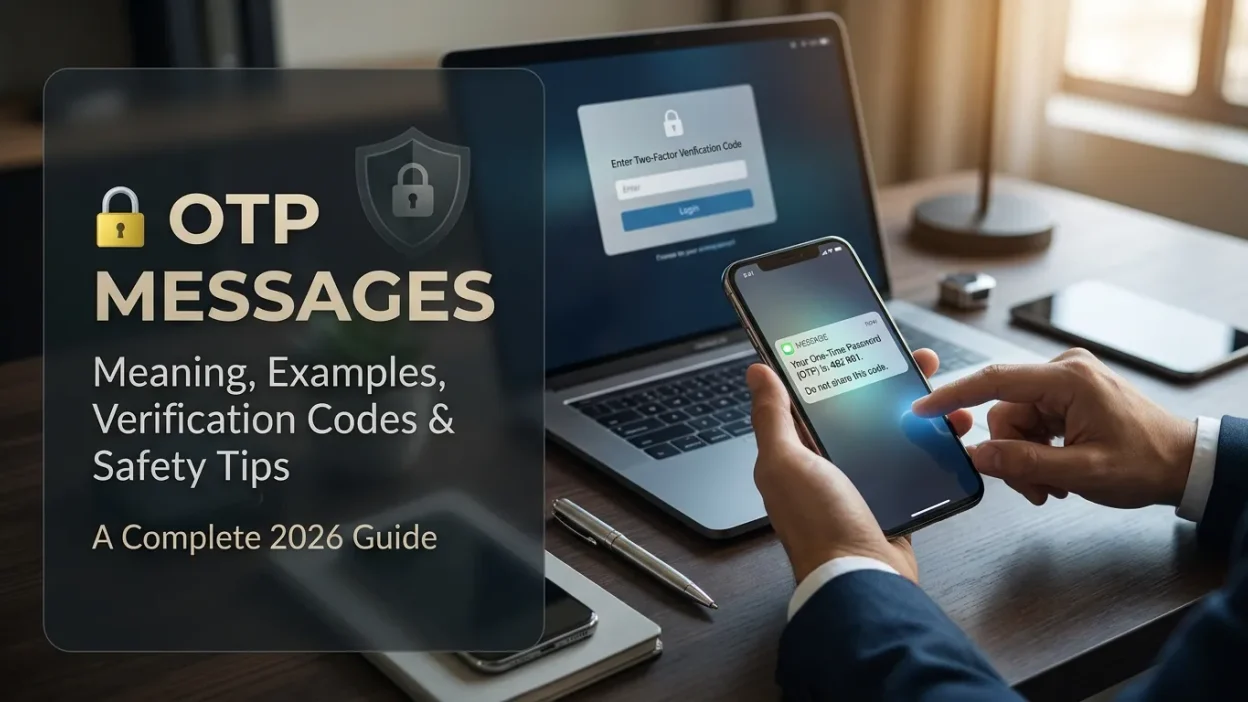
An OTP message is a text containing a one-time password, a short code that proves you’re you when logging in or approving a transaction. It’s one of the most common security tools in modern digital life, and also one of the most targeted. Every day, millions of these codes land on phones worldwide, and scammers have built entire operations around stealing them.
Understanding what these messages are, how they work, and where the risks lie makes you harder to fool. This guide covers the essentials without the jargon.
What an OTP Actually Is
A one-time password is a numeric or alphanumeric code that authenticates a single action. It expires quickly, usually within 30 to 60 seconds, and can only be used once . Banks, email providers, shopping sites, and social media platforms all use them as a second layer of security beyond your password.
The logic is simple. Your password proves you know something. The OTP proves you possess something, specifically the phone tied to your account. Together they form two-factor authentication, or 2FA . Even if someone steals your password, they can’t get in without the code that only your phone receives.
How OTP Delivery Works
Most OTPs arrive by SMS, though authenticator apps and email are also common. When you trigger a login or transaction, the service generates a random code and sends it to your registered device. You type it in, the server checks it, and if it matches, you’re in.
SMS delivery has practical advantages. It’s fast, works on any phone, and doesn’t require installing an app. That convenience is why banks have relied on it for years . The downside is that SMS is not the most secure channel, a point worth understanding.
The Security Reality: OTPs Are Useful but Not Bulletproof
Here’s the part most people don’t hear until something goes wrong. OTPs are effective against guessing and reuse, but they’re vulnerable to phishing. If a scammer can convince you to read out the code, the protection collapses .
The standard that governs authentication security, NIST SP 800-63B, classifies SMS OTP as a “restricted” authenticator. It’s allowed, but organizations using it are expected to have a risk assessment and a migration plan toward stronger methods . That’s not a condemnation of OTP. It’s an acknowledgment that a typed code has limits.
The Most Common OTP Scam
The scam works like this. A scammer already has your username and password from a data breach. They try to log into your account, which triggers a real OTP sent to your phone. Then they call or text you, pretending to be your bank’s fraud team or a support agent. They claim there’s suspicious activity and ask you to read back the code to “verify” or “block” the transaction .
The code is genuine. The text really did come from your bank. That’s what makes the scam convincing. But the action it authorizes is the scammer’s login, not your security check. Anyone who calls asking for a code is, by definition, trying to be you .
What to Do If You Receive an Unexpected Code
A code you didn’t request means someone is trying to access an account tied to your phone number. Don’t panic, but act.
First, don’t share the code with anyone, no matter who they claim to be. Second, go directly to the account the code was for and change your password. Third, check for any recent login activity or changes to linked devices or contact details . If the code was for a bank, call the number on your card and explain what happened.
Speed matters. If you shared a code before realizing it was a scam, change the password immediately, sign out of all active sessions, and contact the provider .
Why You Shouldn’t Rely on SMS Alone
SMS OTPs can be intercepted through SIM-swap fraud, where a scammer convinces your carrier to transfer your number to a SIM they control. Once that happens, they receive your codes directly . The attack requires social engineering, but it happens regularly enough that security experts recommend stronger alternatives for high-value accounts.
Authenticator apps generate codes on your device without relying on SMS. Passkeys and hardware security keys go further by resisting phishing entirely . If your bank or email provider offers these options, enabling them is worth the few minutes it takes.
How to Handle OTP Messages Safely
A few habits make a real difference.
Never share a code with anyone. Legitimate services will never ask you to read back a code they sent . Treat every unexpected code as a signal to check your account security. Don’t enter codes through links in unsolicited messages; open the official app or type the website address yourself . And if a code arrives while you’re on a call with someone claiming to be support, hang up.
Frequently Asked Questions
What does OTP stand for in a text message?
OTP stands for one-time password. It’s a short code sent to your phone to verify your identity for a login or transaction. It expires quickly and can only be used once .
Why did I get an OTP I didn’t request?
Someone is trying to access an account linked to your phone number. They may have your password from a breach and need the code to complete the login. Don’t share it, and change the password for the account the code was for .
Will my bank ever ask me to read back an OTP?
No. Banks and legitimate services never call or text to ask for a code they just sent. That request is always a sign of fraud. Hang up and call your bank using the number on your card .
Is SMS OTP secure?
It’s better than no second factor, but it has known weaknesses. SMS can be intercepted through SIM-swap fraud, and codes can be phished if you’re tricked into sharing them. For high-value accounts, an authenticator app or passkey is stronger .
What should I do if I accidentally shared an OTP?
Change the password for the account immediately. Check for any unauthorized changes, sign out of all sessions, and contact the provider. If it was a banking code, call your bank right away .
Can OTP messages be fake?
The message itself can be spoofed, but the code is only useful if it was generated by a real login attempt. Scammers often trigger a real code and then call you to extract it. The code is real; the story around it is the lie .
Conclusion
An OTP message is a small, temporary key that protects some of your most important accounts. It’s useful, widely used, and worth understanding. The core rule is simple: a code proves you’re you to a machine, so anyone asking you to share it is trying to take your place. Keep codes private, treat unexpected ones as warnings, and upgrade to stronger authentication where you can. 🔐

Olivia Bennett is a content writer who specializes in word meanings, internet slang and everyday expressions. She enjoys creating clear, informative content that helps readers understand language and discover the meanings behind words.